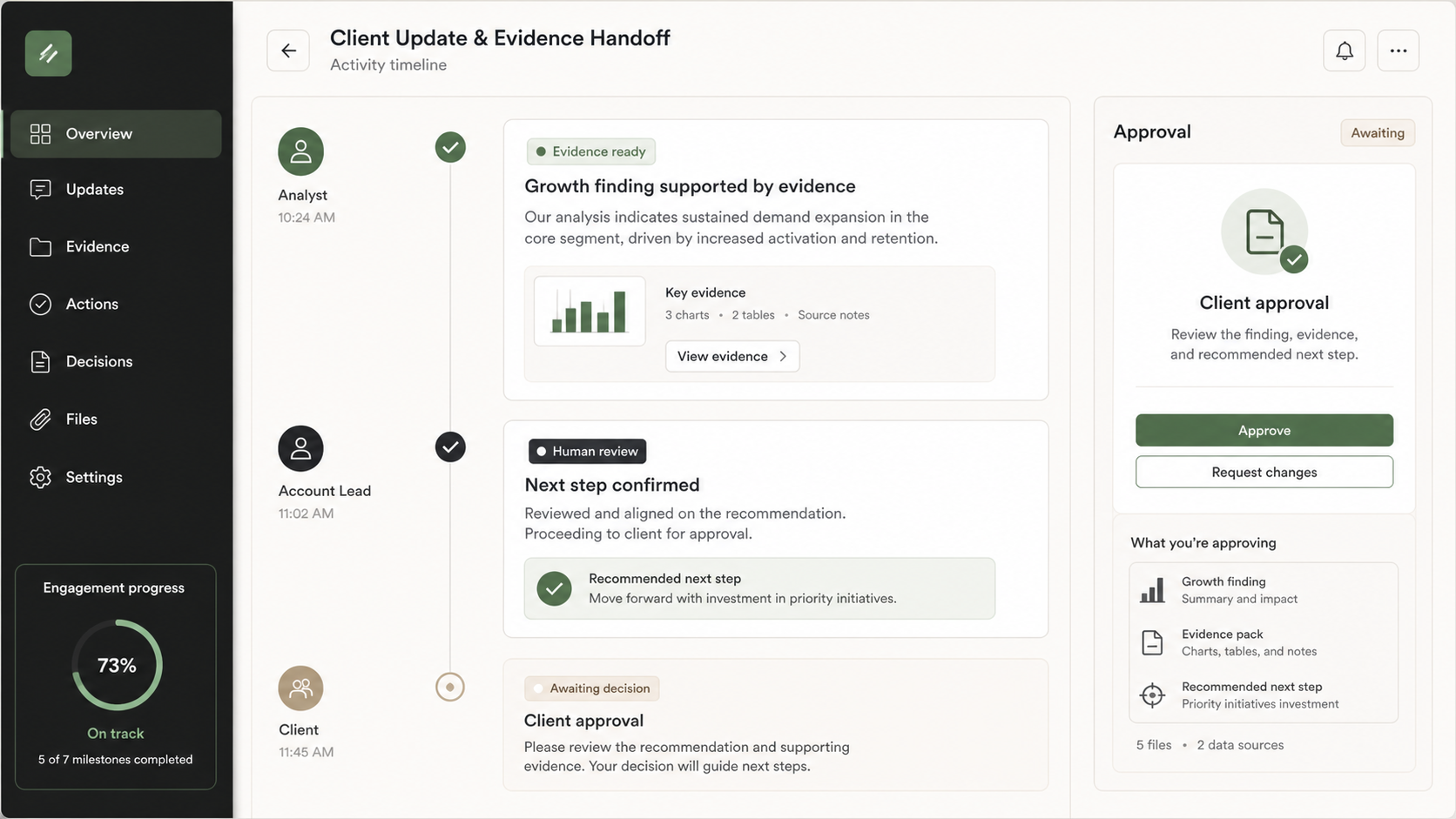
Human approval
Paid, external, publishing, and irreversible actions require a human decision.
Trust and control
Account isolation, approval gates, constrained credentials, and visible data provenance are part of the product—not fine print.
Human-led · Client-scoped · No action without approval
Control is visible
Human review, tenant boundaries, credential containment, and client-visible approval history are designed into the operating flow.
The value
Private client data stays tenant-scoped. Provider credentials remain encrypted and server-side. Public samples are labeled and contain no real client identity or performance data.
Paid, external, publishing, and irreversible actions require a human decision.
Private context and account records do not move between client workspaces.
Passwords stay with providers; access can be revoked through the supported connection path.
Client-visible activity and approval decisions retain owner and timestamp context.
One shared control layer
Questions
No private client identity, number, strategy, or account context crosses the boundary. General methods may improve independently of client data.
Start with the constraint
Christian reads every submission and will tell you plainly whether Frac7 is a fit.
Talk to Christian